
Palisa, Along With Her Fellow Australian Chefs, Share the Tasty Tips Their Mothers Taught Them
It may well be the profession most influenced by mothers. Through formative childhood experiences in the kitchen and recipes passed down from one generation to the next, chefs around the world often credit their love of food and passion for cooking to their mums. Life & Leisure spoke to three of Australia's top restauranteurs to find out the lessons they learnt from their mothers and how that relationship has shaped their careers.
Palisa Anderson and her mum, Amy Chanta
Amy Chanta, who passed away in 2021, founded Sydney's original Chat Thai restaurant in Darlinghurst. She passed her love of Thai food to her daughter Palisa Anderson, who carries on the Chat Thai name at five Sydney locations.
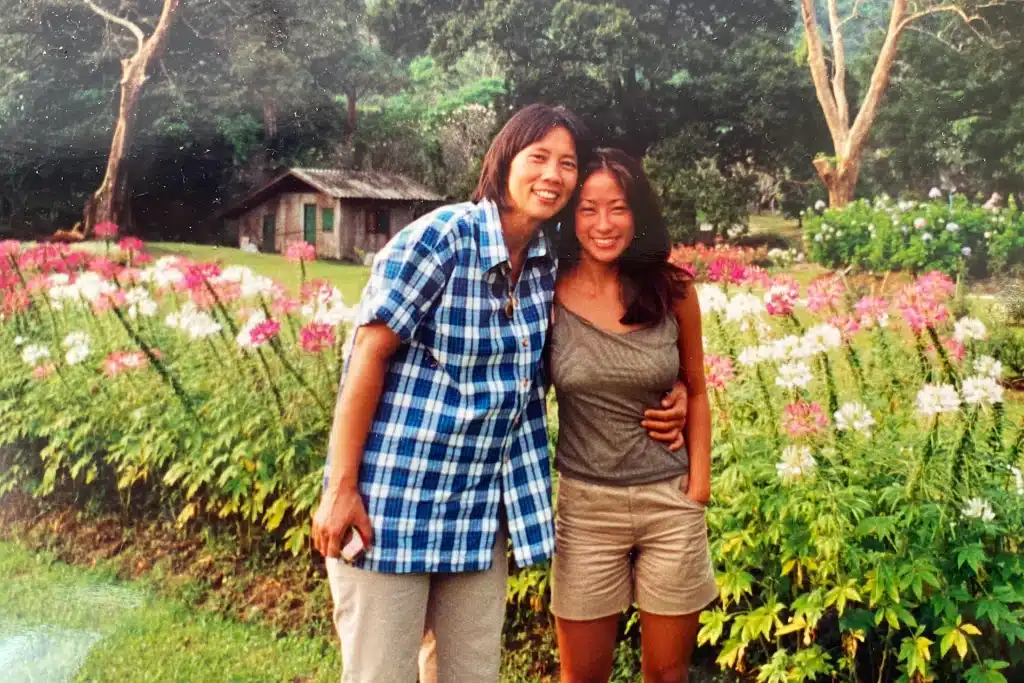
Another time when I was about nine or 10, she took me to Thailand to an AIDS orphanage, so we could serve food to the kids. She was so empathetic. On the first day we made Thai food: rice and side dishes. But the next day she went and bought McDonald's. And the kids absolutely loved it because they had never tried anything like it before.
Her way of showing her love to me was by cooking. I was a latchkey kid because she was always in the restaurant, but I'd come home and there'd be a pot on the stove: honey soy chicken drumsticks, or pork mince with tofu and salted fish. You could tell she loved cooking it because it was always so delicious. It wasn't restaurant food, it was just very homey and comforting.
The best tip my mum ever gave me with cooking was "sauté something until it's fragrant", which means take your time and don't add the next thing until you can smell the first thing. It teaches you to smell and taste and it's a trick that works across all cuisines.
I was cooking palo, a five-spice pork belly stew, the other day and I started crying because I could hear her voice in my ear telling me I needed to cook this for my kids so they would know the flavour. Watching them eat dinner that night gathered around our table, I could tell they loved it as much as I do.
Shaun Christie-David and his mum, Shiranie
Shaun Christie-David runs Colombo Social, Kyiv Social, Kabul Social and Kolkata Social, all in Sydney, and the social enterprise Plate It Forward, which provides restaurant-quality meals to those in need. This year he launched 'Mum Cha' at Colombo Social – a monthly series where chefs and other food identities cook alongside their mothers.
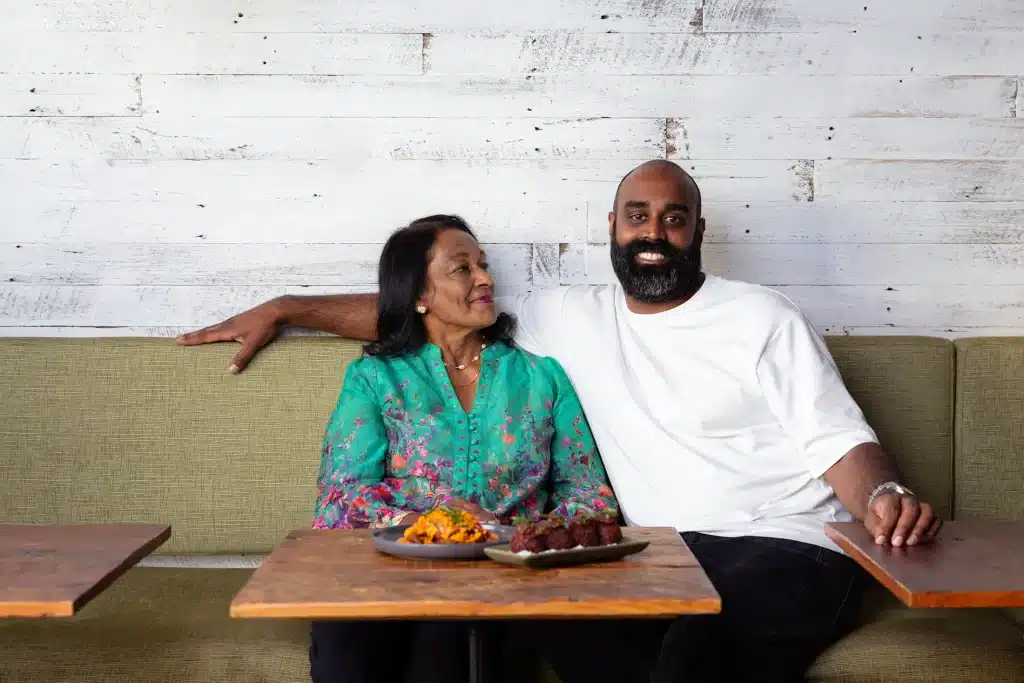
My early childhood memories are of Mum creating what we now call "fusion food". She'd read The Australian Women's Weekly and adapt the recipes. There was a Sri Lankan twist on everything she did, so the spaghetti or moussaka would have curry powder. It was her way of assimilating into Australian culture.
Cooking is Mum's love language. I would cook alongside her when I was a kid but looking back I think she mostly delegated the stuff to me that she hated, like pounding ginger and peeling onions. We would stand there together for ages. I'm not a chef, but I think I can design menus because she taught me how to balance flavours. Never with a measuring spoon or anything like that. It was always gut instinct.
Early on with Colombo Social, mum had that migrant thing of almost being embarrassed of her food: what if people think it's too spicy, what if they don't like it? But over time her confidence grew. The chefs in the restaurants, especially Colombo, have such a deep respect for her. She takes so much interest in what they're doing. When she cooks, everyone downs tools and gravitates to her to watch what she's doing.
I started Mum Cha because I wanted people to be able to see women like my mum, who have historically not had a voice, believe in themselves.
I started Plate It Forward because she taught me that no one should ever go hungry. I don't give back because I'm a good person. I give back because I was raised by a very good mum.
Daniel Migliaccio and his mother, Desolina Teresa
Daniel Migliaccio is the head chef of Studio Amaro in Melbourne. His mother, Desolina, is a retired deli worker and childcare worker. Along with his nonnas Maria and Placida, she was crucial in shaping his love for food.
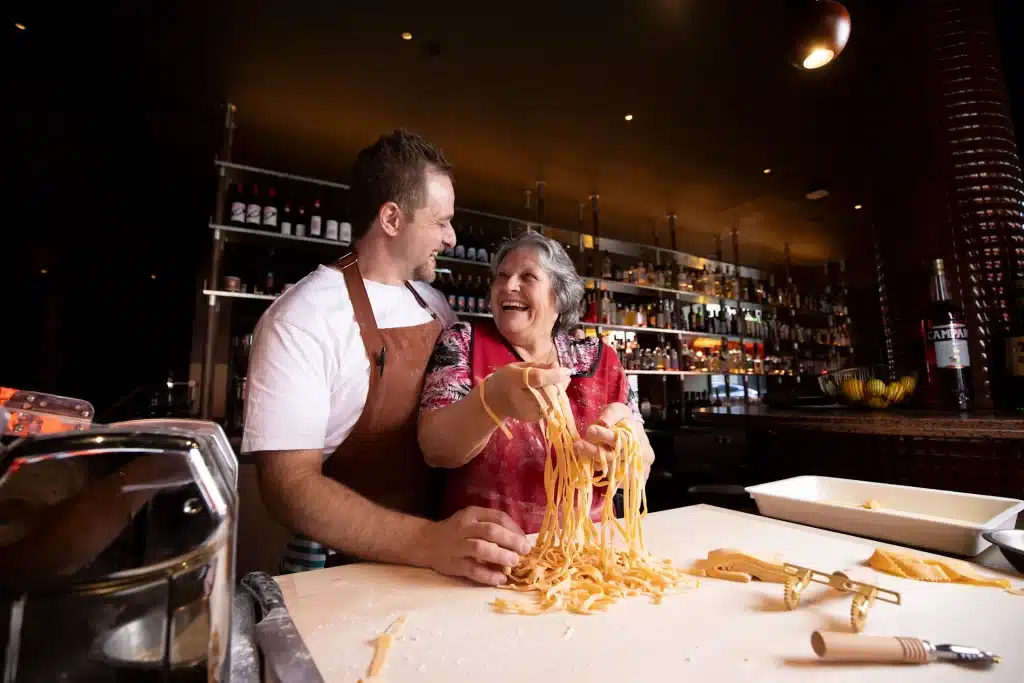
As I age and my cooking grows more thoughtful, I draw more from my Neapolitan heritage. The foods I learnt from the matriarchs in my family are something I have only properly appreciated with age.
Like pastiera Napoletana, an Italian Easter tart with ricotta, candied peel, orange blossom and wheat. Never eaten straight away; it has to sit overnight to be demolished with a coffee and amaro.
I think back to helping Mum shape gnocchi or playing with the dough of the pizza di scarola, a baked pizza pie filled with cooked escarole (a type of endive) or cime di rapa (broccoli rabe), olives, anchovies and egg, which we would eat on Christmas Eve.
Or casatiello, a round spelt bread spiced with pepper, salami and provolone cheese with eggs baked on top, for everyone to fight over on Easter Sunday. I cherish memories of watching Mum proof the bread on the table with a blanket on top and helping her sprinkle the salami and cheese on top before it's baked.
Christmas we would always be at Nonna Placida's, helping her stir the big pot of custard to pour into the custard tart, the Torta Della Nonna.
These dishes are only really right when you make them at home. They can't be replicated anywhere else; just like you can't replicate the love of your mother or your nonna when they're telling you you're doing it wrong.
These days I try not to let my mum into the kitchen so she can relax. Or we make something together: rolling pasta or baking Migliaccio cake, a ricotta, lemon and semolina cake that coincidentally shares our name. It's something I appreciate and cherish now more than ever.
Now that my two-year-old daughter, Olivia, is old enough to start prodding around the kitchen, I can't wait to hand these traditions to her, and watch her share those moments with her nonna, the way I did.